
By Denise Hattingh, Managing Director, KEU Underwriting Managers
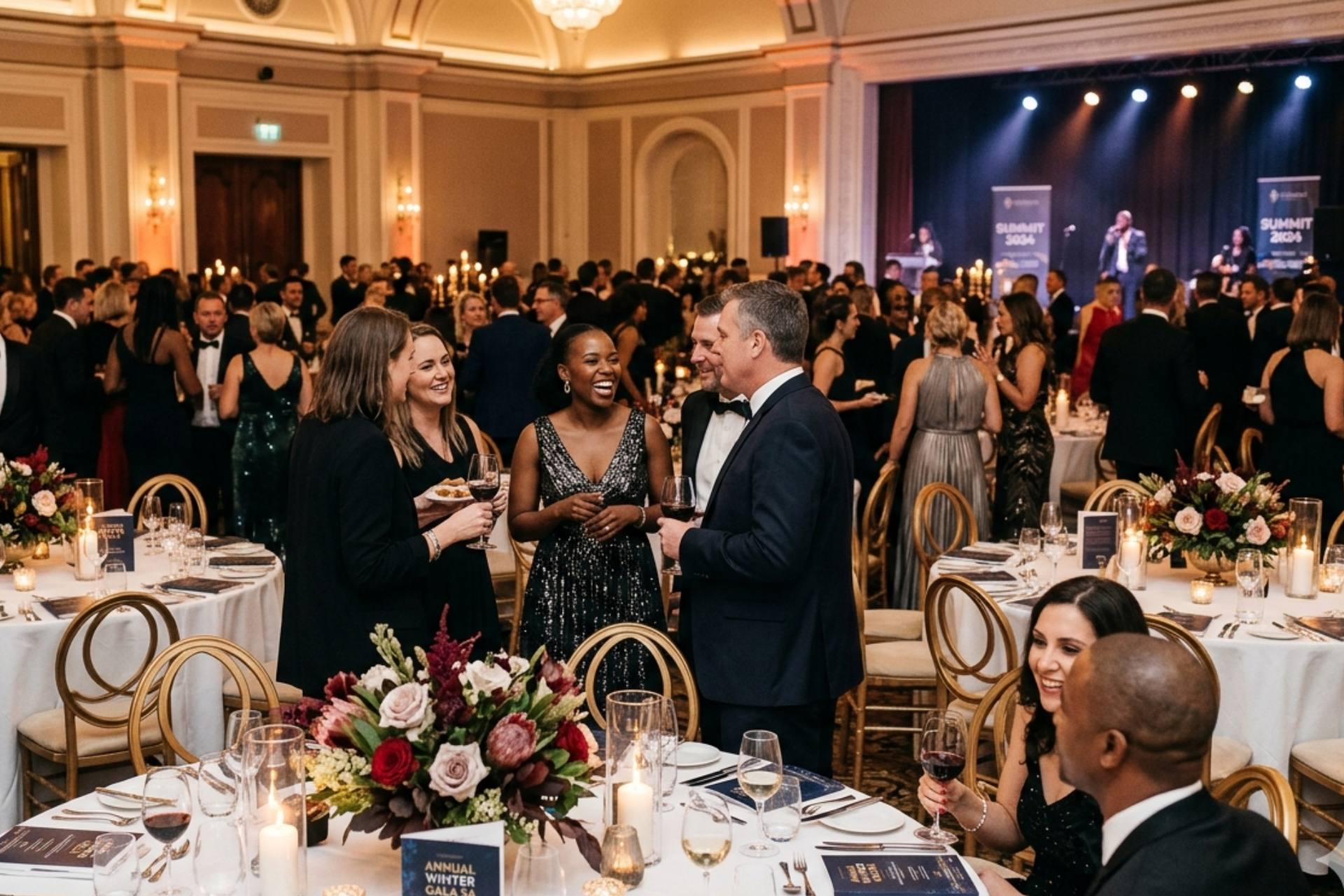
Every year, around this time, I notice the same shift happening across the South African events calendar. The big outdoor productions start wrapping up. Open-air activations and summer festivals give way to conference season, gala dinners, corporate functions, indoor exhibitions, and all the seasonal experiences that suit a colder month. It is a natural transition. Most people in the industry barely notice it.
But I do, because I have seen what tends to go wrong when it is not planned properly.
I have been doing this since 1996, and I still have conversations, every single winter, with brokers who are blindsided by a gap they did not know existed. Usually, it comes down to an assumption that was never tested. The policy looked fine. Nobody sat down to ask whether it still reflected what the event actually looked like.
That is really what this piece is about. Not a warning but more of a nudge. Get ahead of it now, and there is usually very little to worry about.
Moving Indoors Changes the Risk Profile Completely
An outdoor event and an indoor event can share the same guest list, the same entertainment, and the same brand objective. But the operational environment is very different, and the exposure reflects that.
I am talking about hotel ballrooms, heritage buildings, and private estates. Gorgeous venues. And venues where a production crew rushing a load-in at six in the morning can cause five figures of damage before breakfast. That is not worst-case thinking. That is Tuesday.
When an organiser has signed a venue hire agreement and accepted responsibility for the space during occupation, the liability exposure from that kind of damage can be very significant. Venues carry their own insurance for physical damage, but where an organiser is found responsible for causing it, the liability that follows is a separate matter entirely. If the policy wording does not specifically address third-party liability arising from damage to a venue during occupation, there can be a gap that only becomes visible at exactly the wrong moment.
That gap is not theoretical. It shows up in claims.
Heating, Lighting and the Fire Risk That Catches People Off Guard
In winter, organisers naturally want to create warmth and atmosphere. Gas heaters, portable heating units, decorative candle arrangements, and additional production lighting. These feel like routine additions because, operationally, they are. Most events run them without incident.
What you end up with, though, is a room running more power than usual, temporary cabling run by a crew who have never been in that building before, and heating equipment that needs to meet specific safety requirements before an event can proceed. At KEU, we are clear on this: the necessary safety certificates, compliance documentation and clearance checks are not optional. They are part of how the cover is structured. Where those requirements are not met, the policy may not respond. That is not a technicality; it is how responsible underwriting works, and it is ultimately what protects both the organiser and the venue.
This is not about discouraging organisers from creating a beautiful environment. It is about making sure the cover structure reflects what is actually happening on the floor. General liability cover, carried over from a previous season without review, sometimes does not go far enough.
For fire prevention requirements, the South African Bureau of Standards and applicable venue safety regulations are worth consulting during the planning phase.
Weather Still Matters, Even When You Are Indoors
One thing I hear fairly often is that the weather stops being a factor once an event moves indoors. I understand why people think that. It is also not quite right, though the reason is more specific than most people realise.
We do not insure indoor events for weather damage directly. What we do insure is the consequence of the weather on whether an event can actually proceed. If severe conditions flood a venue and it becomes unavailable, that is an insurable event under our event cancellation solution. If roads are flooded and guests, crew, or suppliers cannot physically access the venue, that inaccessibility is equally insurable under the same solution. The weather itself is not the policy trigger. The inability to host the event as planned is.
That distinction matters because it changes the conversation brokers need to have with their clients. The question is not whether a venue has a roof. It is whether cancellation cover is in place that reflects the real reasons an indoor event might not go ahead.
The South African Weather Service publishes seasonal outlooks that can support early planning conversations. But the most useful thing a broker can do is raise cancellation cover before the forecast becomes a factor, not after.
Smaller Events Still Carry Real Liability
Not every winter event is a major production. May and June bring school fundraisers, community food markets, church fairs, charity dinners, and smaller indoor gatherings of every kind. These events often run on modest budgets and tight timelines.
What they do not run without is liability. Members of the public are present. Service providers are contracted. Venues are occupied under agreements. If something goes wrong, the organiser is responsible, regardless of how small or informal the event felt.
Most of these organisers have never had the conversation. They figure it is not for them, or they get a quote once, it comes back higher than expected, and that is the end of it. Which is a shame, because the gap between what they think it costs and what it actually costs at this scale is usually a lot smaller than they assume.
This is part of why we developed KEU Lite. It is a streamlined event liability solution built specifically for smaller-scale events, making specialist thinking accessible at a price point that works for church bazaars and community markets as much as it does for mid-sized corporate functions. The scale of an event changes the premium. It does not change whether the risk exists.
Winter Campaigns and Prize Exposure
Brands often use winter events to drive engagement through in-venue promotional activity. Competitions, giveaways, draw-based prizes, performance-linked rewards. They create positive energy in a room and work well for activation campaigns in enclosed spaces.
They also create prize fulfilment exposure that is easy to overlook. Where a high-value reward is on offer, and someone meets the qualifying criteria, the organiser carries the liability for delivery. Without a Prize Indemnity solution in place, that risk sits entirely with the client.
Worth raising before the campaign launches. Because once someone sinks the putt or spins the right number, the conversation you have to have about why it is not covered is considerably worse than the one you could have had two weeks earlier.
The Conversation to Have Now
May is a good time to pick up the phone. Not because anything has gone wrong, but because there is still time to get things right.
The question I would put to any broker currently reviewing a winter portfolio is straightforward: has the venue changed, and if so, has the risk been reviewed with the same attention as the logistics?
In my experience, the events that turn into difficult claims are seldom the ones where someone was reckless. They are the ones where a broker ticked the box, the organiser signed the form, and nobody actually checked whether the cover matched what was happening on the ground. A proper review of the wording, the extensions in place, and the timing of any cancellation or weather-related cover takes less time than the conversation you have to have afterwards if something goes wrong.
If you are working through your winter portfolio and want to talk through the risk profile of upcoming events, the KEU team is available. Our specialist solutions for Event Liability and Event Cancellation are designed to give brokers the tools to advise with confidence, and to give clients the cover that actually reflects what their event looks like on the day.
Indoor events are not outdoor events moved under a roof. The sooner that conversation happens, the better the outcomes tend to be.
About the Author
Denise Hattingh is the Founder and Managing Director of KEU Underwriting Managers, South Africa’s leading specialist underwriter for the film, television and events industry. She has worked in entertainment insurance since 1996 and founded KEU in 2001. Over more than two decades, she has underwritten some of South Africa’s most significant productions and events, from the 2010 FIFA World Cup opening ceremony to international film productions and large-scale public gatherings. Connect with Denise and the KEU team at keu.co.za.